 Matanzas Pass Preserve was interesting because you got to explore on your own which was also difficult because I do not think you learn as much that way. What I liked most about this field trip was the mangrove section by the water. It was cooler there and seeing the water through the mangroves provided a calming feeling. Unfortunately, the rest of the field trip was hot and sticky and the sun was brutal. I think I would go back but only in the winter when it is not so hot. Florida is famous for the amount of mangroves that li
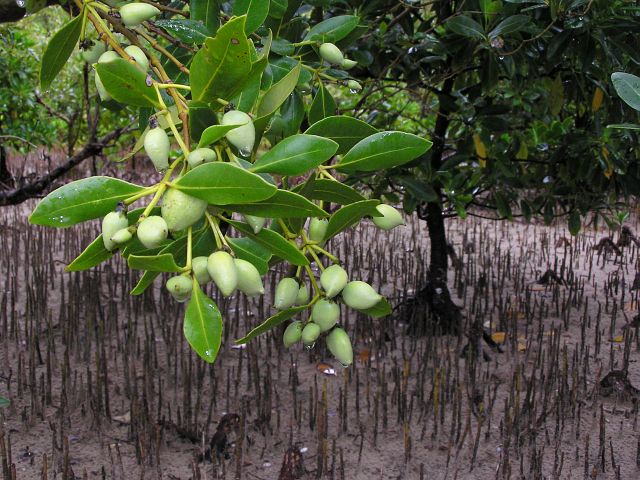 ne our waters. Florida has so many mangroves because of the warm climate. Mangroves are tropical plants that will die in freezing temperatures so they are perfect for Florida since we rarely see freezing temperatures. There are three types of mangroves including: red, black , and white. Red mangroves grow closest to open water, white mangroves grow closest to shore, and black mangroves are seen in the northern parts of Florida. Mangrove systems are very important because they provide protection for smaller species of animals. Below the water, animals like sponges, oysters, and mussels make the mangrove roots their home, whereas, above the water the m
 angroves provide shelter for snails, crabs, and spiders. Another variety of the mangrove is called the buttonwood. The buttonwood is only considered an associate of the mangrove and it is shrubby by the shore and turns into more of a tree form as it grows further inland. The first picture is of a red mangrove, the second picture is of a white mangrove, the third
  is a black mangrove, and the fourth is a buttonwood. Estuaries are important for many species because they provide protection for endangered and small animals. The mangroves help the estuaries provide this important protection. Lee County's Conservation 20/20 program was started by a group of citizens who were concerned about the amount of land set aside for conservation. They were displeased that only ten precent of land was set aside for conservation and they wanted to do something to change that. They started chaning this by buying undeverloped land and turning them into preserves and all of the preserves are open to the public. A few preserves include Matanzas Pass Preserve, Flag Pond Preserve, and Gator Hole Preserve. I think that what this program is trying to do is great for South Florida. If these concerned citizens had not
  stepped in to change things it is possible that Lee County would have had very little conservation land. I am not aware of any other programs like this but I certaintly hope there are programs like this in every state. With the rate at which America is using resources, we need to conserve as much land as possible. Matanzas Pass Preserve was acquired on January 20, 2006 and it cost $1,400,000.00. It is sixty acres filled with a variety of species that need the preserve. The preserve is broken into three natural communites including maritime hammock, mangrove swamp, and coastal grassland. The preserve is open to anyone wanting to take a look at these natural communities. It was an interesting and beautiful place to visit.


