.JPG) ECHO was an amazing place. I had never been there before and I am very glad that I went because I learned so much. My little cousin, Jessica, learned a lot too and she liked seeing the goats and chickens. ECHO travels the world teaching third world farmers appropriate techniques for their area so that they can have the most success with their farms. ECHO provides farmers with sample seed packets. I think this is interesting because I would have assumed that they just give the farmers tons of seeds but they don't. They encourage the farmers to experiment and find what works for them. Everywhere is different and not all crops grow in all places so it is important to understand the land know what crops are going
ECHO was an amazing place. I had never been there before and I am very glad that I went because I learned so much. My little cousin, Jessica, learned a lot too and she liked seeing the goats and chickens. ECHO travels the world teaching third world farmers appropriate techniques for their area so that they can have the most success with their farms. ECHO provides farmers with sample seed packets. I think this is interesting because I would have assumed that they just give the farmers tons of seeds but they don't. They encourage the farmers to experiment and find what works for them. Everywhere is different and not all crops grow in all places so it is important to understand the land know what crops are going.JPG) to survive and become the most profitable. Third world farmers face many challenges, some they can control and some they cannot. The main thing they need is education because they need to be taught techniques that can help sovle their problems. For example, some farmers face the problem of sloped piece of land where they need to plant crops. ECHO teaches these farmers how to make the land work in their favor. The tour guide showed us a very basic piece of equipment made of wood that is shaped like an A and has a rock that hangs from a piece of string from the top of the A. You put one leg of the A in the ground and turn it until the rock is perfectly in the middle and that is where you plant the crops. Another problem faced by third world farmers is predators. Many animals can destroy crops easily and the all the farmers' hard wor
to survive and become the most profitable. Third world farmers face many challenges, some they can control and some they cannot. The main thing they need is education because they need to be taught techniques that can help sovle their problems. For example, some farmers face the problem of sloped piece of land where they need to plant crops. ECHO teaches these farmers how to make the land work in their favor. The tour guide showed us a very basic piece of equipment made of wood that is shaped like an A and has a rock that hangs from a piece of string from the top of the A. You put one leg of the A in the ground and turn it until the rock is perfectly in the middle and that is where you plant the crops. Another problem faced by third world farmers is predators. Many animals can destroy crops easily and the all the farmers' hard wor.JPG) k is ruined. ECHO suggests live fencing. Live fencing is a fence made from live tree limbs. When the limbs are planted in the ground they will sort of grow together and it makes a barrier that is difficult for animals to see through and if an animal can't see it then it doesn't exist so they don't mess with it. The biggest problem in these third world countries is hunger. One of the main things that ECHO concentrates on is keeping the people fed. They do this by having them plant food that is a "belly filler". These are foods high in carbohydrates like rice. The problem of hunger sometimes results from the fact that the people have to work so physically hard every day that they use up their energy. One of the ways that ECHO solves this problem is by the technology they have people
k is ruined. ECHO suggests live fencing. Live fencing is a fence made from live tree limbs. When the limbs are planted in the ground they will sort of grow together and it makes a barrier that is difficult for animals to see through and if an animal can't see it then it doesn't exist so they don't mess with it. The biggest problem in these third world countries is hunger. One of the main things that ECHO concentrates on is keeping the people fed. They do this by having them plant food that is a "belly filler". These are foods high in carbohydrates like rice. The problem of hunger sometimes results from the fact that the people have to work so physically hard every day that they use up their energy. One of the ways that ECHO solves this problem is by the technology they have people.JPG)
use. One piece of tehcnology that is a low energy burner waters crops. You step on two platforms and pump your legs up and down which pumps water through tubes that leads to you crops. This is something everyone in the family can take turns doing so it does not use a lot of energy.
One of the most interesting things I learned was that plants do not need soil because all they need is air, water, and nutrients. I learned that you can plant plants in almost anything. An old tire can be a perfect pot. You cut the "top" off and line the hole on the bottom with the rubber and put plastic over it. Then you can fill it with soil and plant your plants. Another way to plant plants is to build a wooden frame around a piece of carpet and cover the carpet with empty soda cans inside socks. The seeds can be plants right into the carpet and the socks give the roots something to cling to. So, you don't need soil and everyone has items lying around their house that can be used to plant plants.
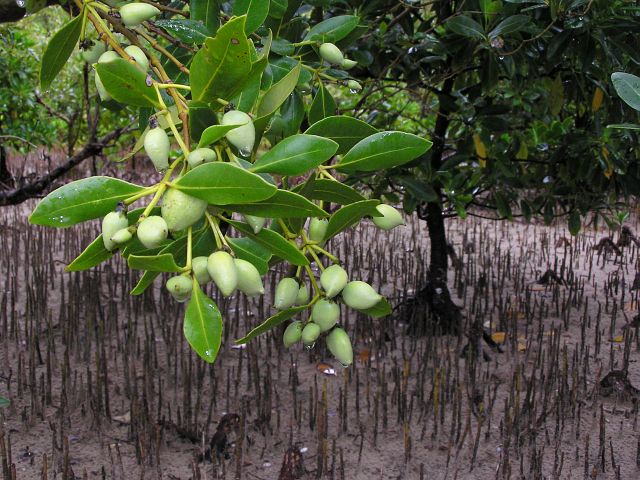
 I was most intrigued by what I learned about the Neem tree and the Moringa tree. It has been discovered that the Neem tree can prevent and help cure gum disease and other mouth problems. A long time ago, a group of people chewed on twigs from the Neem tree and they had no mouth diseases. Today, they make toothpaste from the Neem tree that is one of the most succesful in helping to prevent mouth diseases. Picture to the left is a Neem tree. The Moringa tree has so many amazing properties. Each gram of the leaves contains seven times more vitamin C than oranges, four times the vitamin A of carrots, three times the potassium in bananas, and four times the calcium in milk. This tree can be a lifesaver. When children are malnourished and on the brink of death, they are fed one crushed up seed three times a day and are well nourished and in good health within two weeks. Mothers who have lost the ability to produce breast milk due to malnutrition can
regain their milk within three days just from ingesting one crushed up seed three times a day. This tree can be very important in many third world countries. Picture to the right is a Moringa tree.
ECHO taught me so much about farming that I never knew and they have inspired me to be more conscious of what I consume and how I consume it. I am imspired to start a garden with no soil using their rooftop gardening techniques. I hope that ECHO can reach as many third world countries as possible so that millions can benefit from their knowledge.


 Even though I do not live very far from Ft. Myers I have not really been there very much. I have driven up the coast but I have not seen historical Ft. Myers. I have always associated Ft. Myers with office buildings and legal offices. There seems to be many state and county office buildings that, in my experience, have overshadowed the historical side of Ft. Myers. I never really thought about the history of Ft. Myers and how Calusa indians used to live in this area. Giant sloths walking around and mammoths roaming the land never crossed my mind when I thought
 .JPG) about Ft. Myers. I did not know that Caloosahatchee River means river of the Calusa. It make a lot of sense I just never realized it before. The cattle industry in this area I did know about because of reading A Land Remembered. There is so much history in this area. I really enjoyed the museum. It was the first historical museum th
about Ft. Myers. I did not know that Caloosahatchee River means river of the Calusa. It make a lot of sense I just never realized it before. The cattle industry in this area I did know about because of reading A Land Remembered. There is so much history in this area. I really enjoyed the museum. It was the first historical museum th at I have ever been to and it made me want to go to more. By far, my favorite part was the very beginning where the bones were. The first picture is of a giant sloth and it is kind of scary because it is so big when you are standing right next to it. I am pretty sure that the second picture is a mammoth skull or something like that because of the size of the head and tusks. I liked how the museum provided devices that told you all about things in the museum.
 .JPG) Whenever you came across a picture of a sound symbol and a number you just typed the number in the device and listened. My cousin enjoyed the firefighter section the most. She thought it was cool that there was a old fire truck in there and all of the tools they used to use were hanging on the walls. It was an interesting exhibit. The King Tut exhibit was very interesting but it does not really have much to do with historical Ft. Myers. I think the museum depicted Ft. Myers well and there was a lot to learn. The city has changed a lot over the years. The courthouse has been renovated
Whenever you came across a picture of a sound symbol and a number you just typed the number in the device and listened. My cousin enjoyed the firefighter section the most. She thought it was cool that there was a old fire truck in there and all of the tools they used to use were hanging on the walls. It was an interesting exhibit. The King Tut exhibit was very interesting but it does not really have much to do with historical Ft. Myers. I think the museum depicted Ft. Myers well and there was a lot to learn. The city has changed a lot over the years. The courthouse has been renovated.JPG) and now holds the office of county commissioners. The downtown area has went from the hot spot to shop and party to an area concerned with sustainability. More places are within walking distance so the amount of toxins that cars release are lessened. The downtown area is a place where all types of people can come together. It has came along way from the Calusa indians and cattle industry days.
and now holds the office of county commissioners. The downtown area has went from the hot spot to shop and party to an area concerned with sustainability. More places are within walking distance so the amount of toxins that cars release are lessened. The downtown area is a place where all types of people can come together. It has came along way from the Calusa indians and cattle industry days.